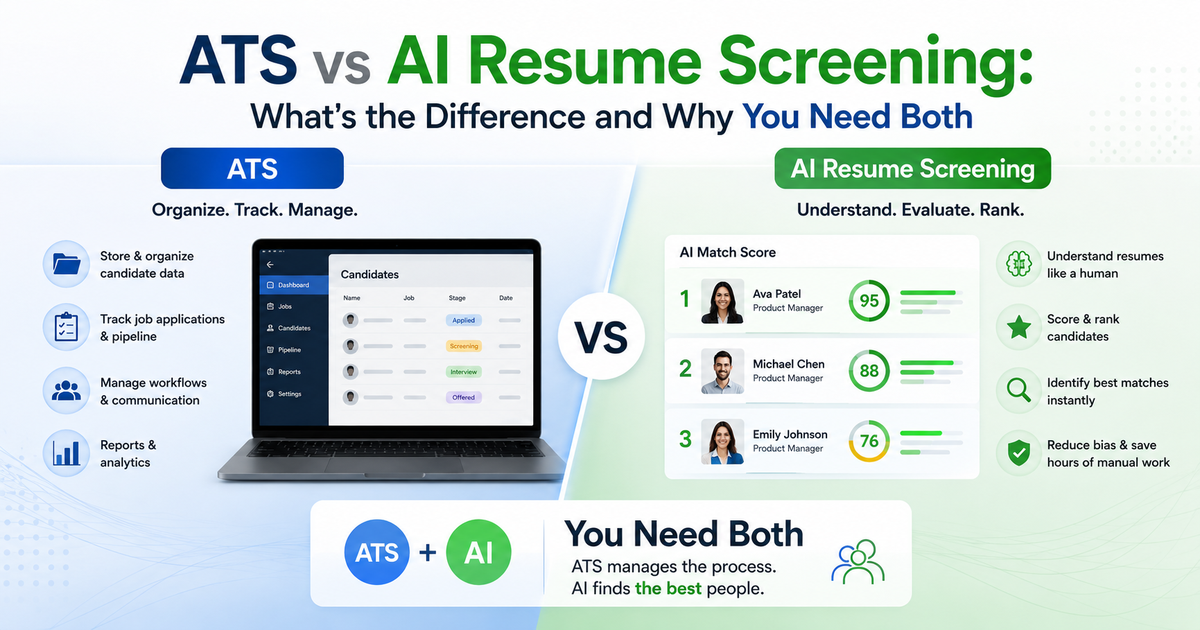
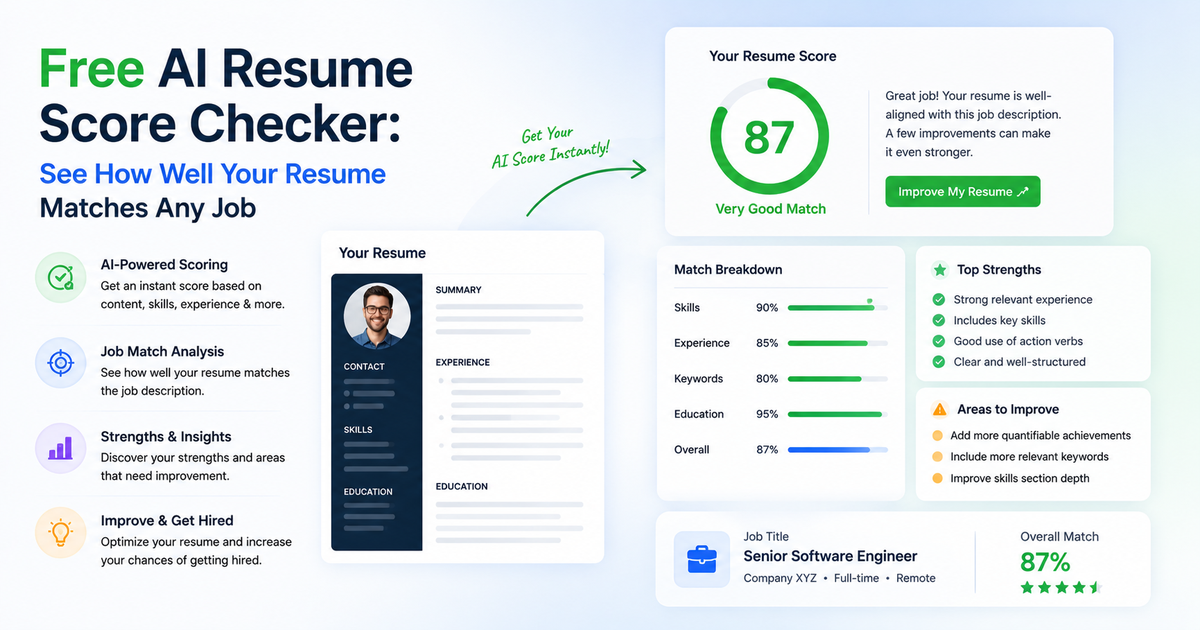
The True Cost of a Bad Hire (And How AI Resume Screening Prevents It)
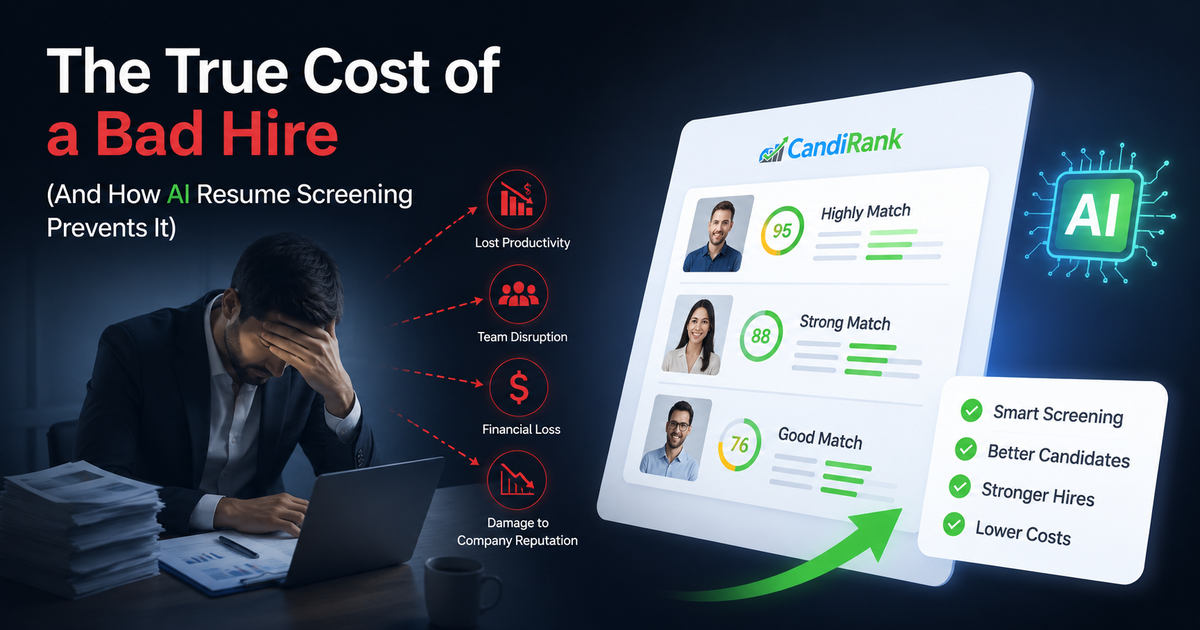
A bad hire can cost your company $50,000 to $240,000+. Learn how AI-powered resume screening helps you avoid expensive hiring mistakes.
Every hiring manager knows a bad hire is expensive — but most underestimate just how costly it really is. Beyond the obvious salary waste, a bad hire triggers a cascade of hidden costs that affect team morale, productivity, and your bottom line for months or even years.
What Does a Bad Hire Actually Cost?
According to the U.S. Department of Labor, the cost of a bad hire can reach 30% of the employee's first-year earnings. For a manager earning $80,000, that's $24,000 in direct costs alone. But that's just the tip of the iceberg. When you factor in recruiting fees, training time, lost productivity, and team disruption, the total cost often exceeds $50,000 per bad hire — and for executive roles, it can climb to $250,000 or more.
The Hidden Costs of Hiring the Wrong Person
1. Lost Productivity and Missed Deadlines
While a new hire ramps up, your team is operating below capacity. If the hire doesn't work out, you've lost not just the ramp-up time but also the time spent managing them out. The average time to identify and terminate a poor performer is 6-9 months. During that period, your team is carrying their workload, missing deadlines, and burning out.
2. Team Morale and Culture Damage
A bad hire doesn't just underperform — they actively drag down everyone around them. Research from Leadership IQ found that 87% of bad hires damage team morale. When high performers see a colleague who isn't pulling their weight being paid the same salary, engagement drops. The best employees start looking for other jobs. The cost of replacing a high performer who leaves due to a bad team fit can be 200% of their annual salary.
3. Management Time Drain
Managers spend an average of 5-8 hours per week addressing performance issues with a struggling employee. That's time they should be spending on strategy, coaching their strong performers, and driving business results. Multiply that by 6-9 months and you've lost over 200 hours of management time — time that could have generated revenue, improved processes, or developed future leaders.
4. Customer Impact and Brand Reputation
If the bad hire is in a customer-facing role, the damage extends to your brand. Poor customer experiences lead to churn, negative reviews, and lost referrals. In sales roles, a bad hire can cost hundreds of thousands in missed quota and burned pipeline relationships. The Society for Human Resource Management (SHRM) estimates that customer satisfaction drops 20-40% when customers interact with underperforming employees.
5. Legal and Termination Costs
Terminating an employee carries its own costs: severance pay, extended benefits, potential legal fees, and unemployment insurance increases. For companies without proper documentation (a common scenario), the risk of wrongful termination lawsuits adds another layer of financial exposure.
How Much Are You Really Losing?
| Cost Category | Estimated Cost |
|---|---|
| Recruiting and onboarding | $4,000 - $12,000 |
| Salary and benefits paid | $30,000 - $80,000 |
| Lost productivity (6 months) | $15,000 - $50,000 |
| Management time managing out | $8,000 - $20,000 |
| Team morale and turnover risk | $10,000 - $50,000+ |
| Total per bad hire | $50,000 - $240,000+ |
How AI Resume Screening Prevents Bad Hires
The most effective way to prevent a bad hire is to screen candidates more thoroughly — before they reach the interview stage. Here's how AI-powered screening tools like CandiRank help you hire better:
Objective Scoring Removes Guesswork
AI evaluates every candidate against the exact same criteria — hard skills, experience, career trajectory, and soft skills — producing a consistent 0-100 score. No fatigue, no bias, no gut-feel decisions. If a candidate's score is low across multiple relevant dimensions, you'll know before you invest interview time.
Red Flag Detection Catches Warning Signs
Modern AI screening detects employment gaps, job-hopping patterns (multiple roles under 12 months), buzzword padding, and overqualification — all of which are statistically correlated with poor hire outcomes. These red flags are surfaced in the candidate's score breakdown, giving you data to make informed go/no-go decisions.
Mandatory Skills Enforcement
With CandiRank, you can mark specific skills as mandatory for a role. If a candidate is missing any mandatory skill, their score is automatically capped at 50 — regardless of how strong the rest of their resume looks. This prevents the common mistake of being impressed by a great resume that's missing a critical requirement.
Stop gambling on hires — start screening with data
The cost of a bad hire is too high to leave screening to chance. AI-powered resume screening gives you objective, repeatable, data-driven candidate evaluation that dramatically reduces your risk of expensive hiring mistakes. Try CandiRank free today — get 10 credits to screen your first batch of candidates and see the difference data makes.
Ready to revolutionize your hiring?
Try CandiRank's AI-powered resume screening — free to start, no credit card required.
Get Started Free