How to Screen Resumes Effectively: A Step-by-Step Guide for Recruiters
Master resume screening with this step-by-step guide. Learn to define criteria, score consistently, and use AI tools to screen candidates faster and more fairly.
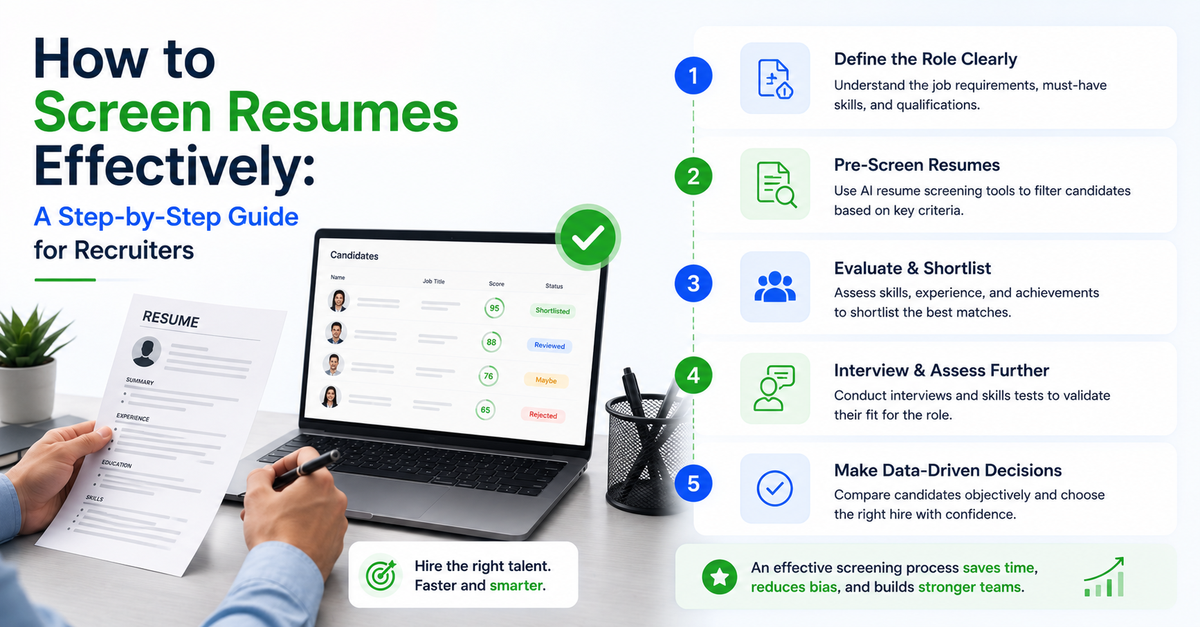
Screening resumes is one of the most critical skills in recruiting — yet most recruiters are never trained how to do it effectively. A structured resume screening process saves hours, reduces bias, and ensures you never miss a great candidate. Here is a complete step-by-step guide.
Why a Structured Screening Process Matters
Without a systematic approach, resume screening becomes a subjective, inconsistent exercise. Studies show that two recruiters screening the same resumes will disagree on which candidates move forward 40-60% of the time. A structured process ensures every candidate gets a fair, consistent evaluation — and dramatically reduces time-to-hire.
Step 1: Define Your Screening Criteria Before You Open a Single Resume
The biggest mistake recruiters make is starting to screen without clear criteria. Before posting a job, define:
- Must-have skills (non-negotiable): The 3-5 skills a candidate absolutely needs. Missing any one = automatic disqualification. Examples: "Must have 5+ years Python," "Must have active CPA license."
- Nice-to-have skills: Skills that add value but aren't dealbreakers. These help you differentiate between strong and exceptional candidates.
- Minimum experience level: Total years and relevant years. Be specific: "5+ years in SaaS product management" not just "5+ years experience."
- Red flags to watch for: Employment gaps over 6 months, job-hopping (3+ roles under 12 months), declining title trajectory.
Pro tip: In CandiRank, you can mark certain skills as mandatory. If a candidate is missing a mandatory skill, their score is automatically capped at 50 — ensuring only candidates with critical qualifications advance.
Step 2: Use a Standardized Scoring System
Don't rely on gut feel. Score every candidate against the same criteria using a consistent scale. A strong scoring system evaluates:
- Skills match (40%): What percentage of required skills does the candidate have? How deep is their expertise?
- Experience relevance (30%): Is their work experience directly relevant to this role? Have they done similar work before?
- Career trajectory (15%): Are they growing? Have they taken on increasing responsibility? Promotions indicate high performers.
- Soft skills and cultural contribution (15%): Communication, leadership, teamwork indicators from their resume content.
This is exactly how CandiRank's AI scores candidates — applying the same four-pillar framework to every resume, every time, without fatigue or bias.
Step 3: Screen in Batches, Not One at a Time
Screening resumes individually leads to inconsistency. The 10th resume gets a different standard than the 50th. Instead, screen all resumes for the same role in one session. This ensures you're comparing candidates against each other, not against an ever-shifting mental standard.
With AI tools like CandiRank, you can upload up to 50 PDF resumes at once and get all candidates ranked against your job description in under a minute. The AI applies the exact same criteria to every resume — no fatigue, no drift.
Step 4: Look Beyond Keywords
Keyword matching is the most basic form of screening — and the least reliable. Two candidates can both have "Python" on their resume, but one used it for 8 years building production systems while the other completed a single online course. Context matters.
When reviewing resumes, look for:
- Achievement statements with numbers: "Reduced processing time by 40%" beats "Improved efficiency."
- Career progression: Promotions and increasing responsibility indicate high potential.
- Transferable skills: A candidate from a different industry may bring valuable adjacent experience.
- Consistency: Do the dates, titles, and descriptions in each role tell a coherent story?
Step 5: Document Everything
Document your screening criteria, scores, and notes for every candidate. This serves multiple purposes: it creates a defensible hiring record, helps you refine your screening process over time, and makes it easy to compare candidates when making final decisions.
CandiRank automatically generates a detailed score breakdown for every candidate, including matched skills, strengths, red flags, and career trajectory analysis. Export everything to Excel with one click for your permanent records.
Screen Smarter, Not Harder
Effective resume screening doesn't have to be time-consuming. A structured process combined with AI-powered tools like CandiRank lets you evaluate more candidates faster — with better results and less bias. Start free with 10 credits and screen your first batch of candidates in under a minute.
Ready to revolutionize your hiring?
Try CandiRank's AI-powered resume screening — free to start, no credit card required.
Get Started Free